

Farmkart Agronomy Guide
Tomato Late Blight Control: Best Fungicides, Dose and Spray Guide
Identify late blight fast, compare Antracol, Equation Pro, Revus and Mancozeb, and build a resistance-safe spray programme for tomato crops.
Reviewed by Dr. Raichand, Senior Agronomist, Farmkart
Quick Answer
Tomato late blight is caused by Phytophthora infestans and spreads fastest when nights are cool, leaves stay wet and humidity is high. Start preventive protection before symptoms in risky weather. If water-soaked spots and underside white mould are already visible, move quickly with a registered curative plus protective fungicide and protect new growth with rotation.
Tomato Late Blight Fungicide Comparison
Use contact protectants before infection and systemic or translaminar products at first symptoms. Current label directions should always override general dose guidance.
| Product | Active ingredient | Best for | Dose | PHI | Price / acre | Farmkart |
|---|---|---|---|---|---|---|
| Antracol 70 WP | Propineb 70% WP | Protective spray before late blight spread | 2-2.5 g per litre water | Follow label | Check current price | Buy Antracol |
| Equation Pro | Cymoxanil + Famoxadone | Early curative action plus protection | 0.4-0.6 g per litre water | Follow label | Check current price | Buy Equation Pro |
| Revus | Mandipropamid | Oomycete blight protection in humid weather | As per label | Follow label | Check current price | Check availability |
| Mancozeb 75 WP | Mancozeb | Low-cost preventive contact protection | 2.5 g per litre water | Follow label | Check current price | Search Mancozeb |
Spray Programme by Situation
| Use case | Recommended option | When to use |
|---|---|---|
| Cool, humid weather before symptoms | Protective contact fungicide such as Antracol or Mancozeb | Start before disease appears in high-risk weather. |
| First water-soaked lesions | Curative plus protective option such as Equation Pro where label permits | Spray immediately, then protect new growth. |
| Resistance management | Rotate contact and systemic groups; avoid repeating one chemistry | Change chemistry every spray cycle during high pressure. |
How to Control Tomato Late Blight
Identify late blight correctly
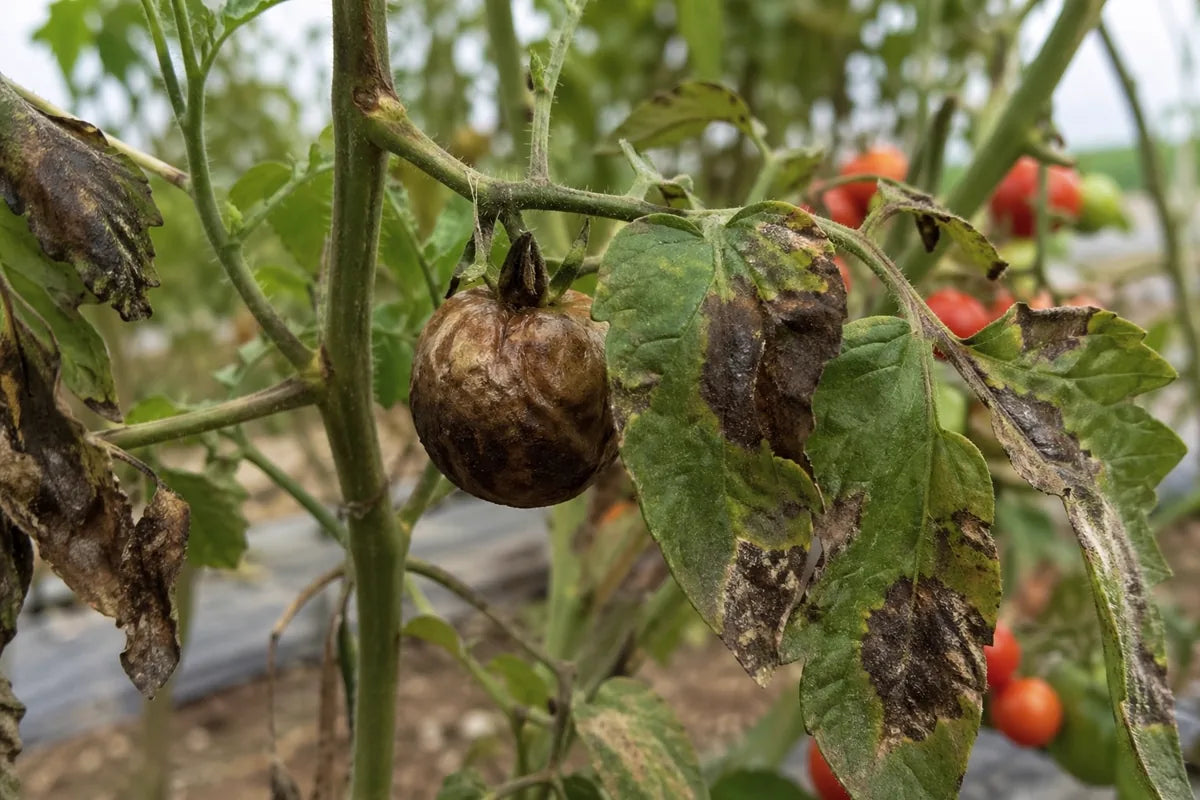
Late blight starts as water-soaked leaf spots, then turns into brown lesions that expand quickly. In humid mornings, white mould may appear on the reverse side of leaves near lesion edges. Early blight is slower and usually shows dry concentric rings.
Start a preventive spray programme
In high-risk seasons, begin protection around transplanting plus 15 days, then maintain a 7-day preventive interval during humid weather. Shorten the interval only when disease pressure and rainfall are severe and the label permits.
Remove infected tissue and improve airflow
Remove heavily infected lower leaves, avoid overhead irrigation and improve plant spacing where possible. Fungicides perform better when leaf wetness and canopy humidity are reduced.
Rotate fungicide groups
Do not use the same systemic chemistry repeatedly. Alternate contact protectants with systemic or translaminar products and always follow the label dose. Under-dosing increases resistance risk.
Harvest and Resistance Notes
Follow the pre-harvest interval printed on the product label for tomato. Do not spray close to harvest unless the label allows it. Use clean water, full canopy coverage and proper PPE. Late blight is easier to prevent than cure, so scouting and weather-based timing matter.
Tomato Late Blight Questions
How do I identify tomato late blight?
Look for water-soaked spots that quickly become brown lesions. In humid conditions, white mould appears on the underside of leaves. Stems and fruit may develop dark greasy-looking patches when infection is severe.
Which fungicide is best for tomato late blight?
For prevention, contact fungicides such as Antracol or Mancozeb are useful. At first symptoms, products such as Equation Pro may provide curative plus protective action where registered for tomato. Choose by label, crop stage and previous spray history.
What is the spray dose for tomato late blight fungicide?
Common contact fungicides are often used around 2-2.5 g per litre water, while systemic combinations vary by formulation. Always follow the exact product label because dose changes by active ingredient and crop registration.
How can I manage resistance in late blight?
Rotate fungicide groups, avoid repeated metalaxyl or single-site systemic sprays, use full label dose and include contact protectants in the programme. Remove infected leaves quickly so the pathogen load stays lower.
Related Farmkart Guides
Need help confirming tomato blight?
Send leaf, stem, fruit and full plant photos to Farmkart Crop Doctor before choosing the next spray.
Ask Dr. Raichand